Summer Roof Care: What Wisconsin Homeowners Must Do Now
Don't wait until fall to think about your roof. Here's what Wisconsin homeowners should be doing this summer to protect their biggest investment.
Don't Let Summer Slip By Without Checking Your Roof
June in Wisconsin means long days, outdoor projects, and the welcome relief of warm weather after another tough winter. But while most homeowners are focused on landscaping and summer gatherings, there's one critical task that often gets pushed to the back burner: roof maintenance.
Your roof just survived ice dams, freeze-thaw cycles, heavy snow loads, and spring storms. Summer is actually one of the best times to assess the damage, make repairs, and take preventive steps before fall rolls back around. Waiting until you spot a leak inside your home almost always means the damage has already spread further than you'd like.
Here's what Wisconsin homeowners should be doing right now to protect their roofs through summer and beyond.
Why Summer Roof Maintenance Matters in Wisconsin
Wisconsin's climate is uniquely hard on roofing systems. Winters bring ice, snow, and repeated freeze-thaw cycles that stress shingles and flashing. Spring delivers heavy rain and debris buildup. Then summer arrives with intense UV exposure and heat that accelerates the natural aging of asphalt shingles.
Asphalt shingles are coated with protective oils that keep them flexible and resistant to cracking. Over time — and faster in harsh climates like ours — those oils evaporate, leaving shingles brittle, granule-depleted, and vulnerable. By the time fall arrives, a poorly maintained roof is already at a disadvantage heading into another Wisconsin winter.
The good news: a consistent summer maintenance routine can extend your roof's life significantly and help you avoid costly emergency repairs.
Your Summer Roof Maintenance Checklist
1. Inspect Shingles for Visible Damage
From the ground (or with binoculars), scan your roof for:
- Missing, curling, or cracked shingles
- Bald spots where granules have worn away
- Shingles that appear darker or stained
- Any areas that look uneven or sunken
Granule loss is a key indicator that your shingles are aging. If you're finding granules in your gutters or downspouts after rain, it's worth having a professional take a closer look.
2. Check Flashing Around Penetrations
Flashing — the thin metal strips around chimneys, vents, skylights, and valleys — is one of the most common sources of roof leaks. Heat expansion and contraction over summer can cause flashing to loosen or pull away. Look for rust, separation, or gaps where water could work its way in.
3. Clear Debris from the Roof Surface
Leaves, twigs, and other debris that accumulated over spring can trap moisture against shingles, encouraging mold growth and premature deterioration. Keeping your roof surface clear reduces this risk significantly.
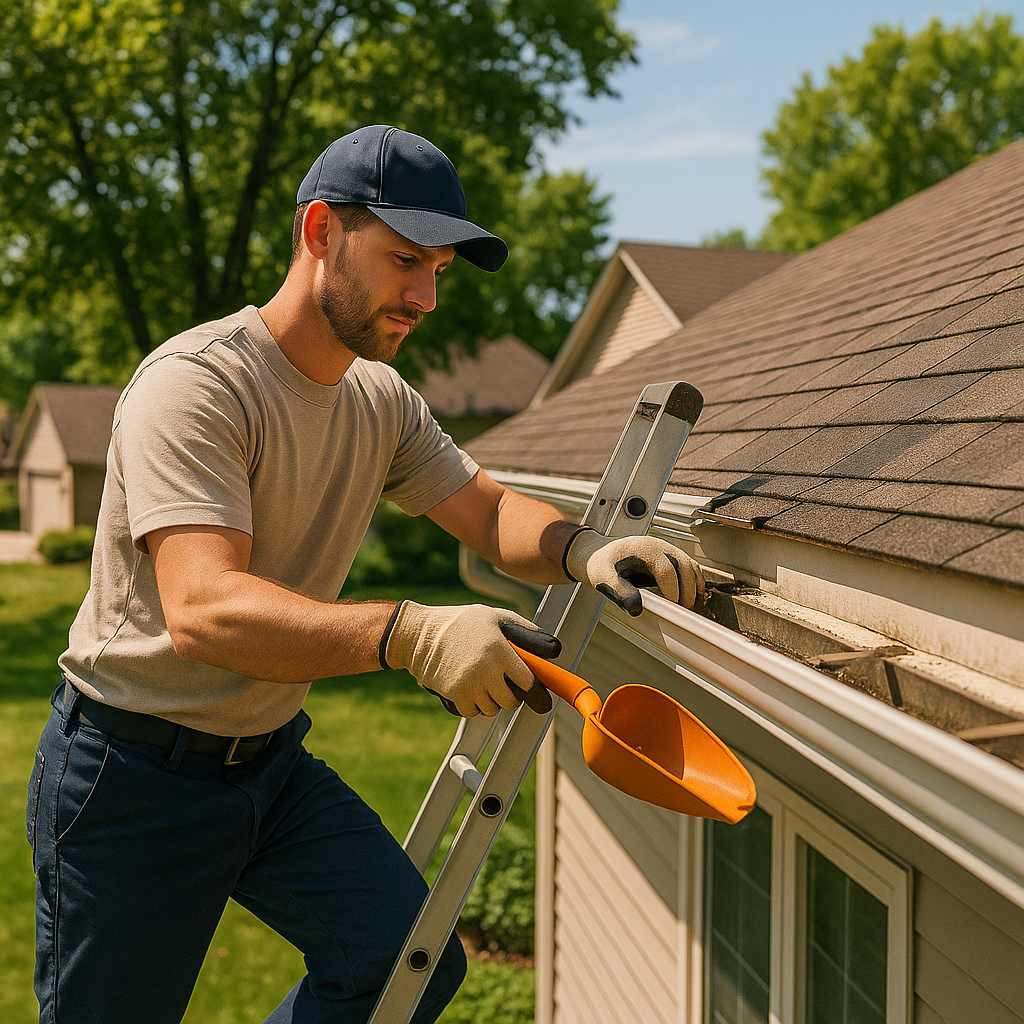
4. Clean and Inspect Your Gutters
Mid-summer is a smart time to re-check gutters, even if you cleaned them in spring. Summer storms bring new debris. Clogged gutters cause water to back up under shingles and along the fascia, leading to wood rot and interior water intrusion.
5. Trim Overhanging Tree Branches
Branches hanging over your roofline create two problems: they drop debris constantly, and during summer storms, they can scrape or puncture shingles. Trim branches back at least 6–10 feet from the roofline if possible.
6. Check Your Attic for Signs of Heat or Moisture
Poor attic ventilation is a year-round problem that gets worse in summer. Excessive heat buildup in your attic can literally cook shingles from the inside, shortening their lifespan. Look for signs of moisture, dark staining on rafters, or insulation that appears matted or damp.
3 Practical Takeaways for Wisconsin Homeowners
Takeaway #1: Don't skip the attic. Many homeowners inspect their roof from the outside but forget to check the attic. Heat and moisture issues discovered early up there can save you thousands in shingle replacement costs.
Takeaway #2: Granule loss is a warning sign, not just cosmetic. If your shingles are losing granules, their ability to reflect UV rays and resist weathering is already compromised. This is the stage where treatments like RoofMaxx can make a real difference — restoring flexibility and protection to aging shingles before they fail.
Takeaway #3: Maintenance now prevents emergencies later. A small repair in June costs a fraction of what an emergency call in January will. Proactive maintenance is always the smarter investment.
Is Your Aging Roof a Candidate for RoofMaxx?
If your inspection reveals shingles that are aging — granule loss, mild brittleness, minor curling — but the roof structure itself is still sound, your home may be an excellent candidate for RoofMaxx roof rejuvenation.
RoofMaxx is an EPA-certified, bio-based treatment derived from soy that penetrates deep into aging asphalt shingles to restore their natural oils and flexibility. A single treatment extends roof life by five or more years, comes with a 5-year transferable warranty, and costs a fraction of full roof replacement. It's one of the most cost-effective tools available to Wisconsin homeowners who want to protect their investment without breaking their budget.
Schedule a Free Roof Inspection with Save My Roof
Not sure where your roof stands heading into the second half of summer? Save My Roof in Watertown, WI offers free roof inspections for homeowners throughout southeast Wisconsin. Our team can assess the condition of your shingles, identify any concerns, and walk you through your options — whether that's a minor repair, a RoofMaxx treatment, or a full replacement plan.
Don't wait for a leak to tell you there's a problem. Reach out to Save My Roof today and get a professional set of eyes on your roof this summer.
Want a free roof assessment? Get a Free Quote