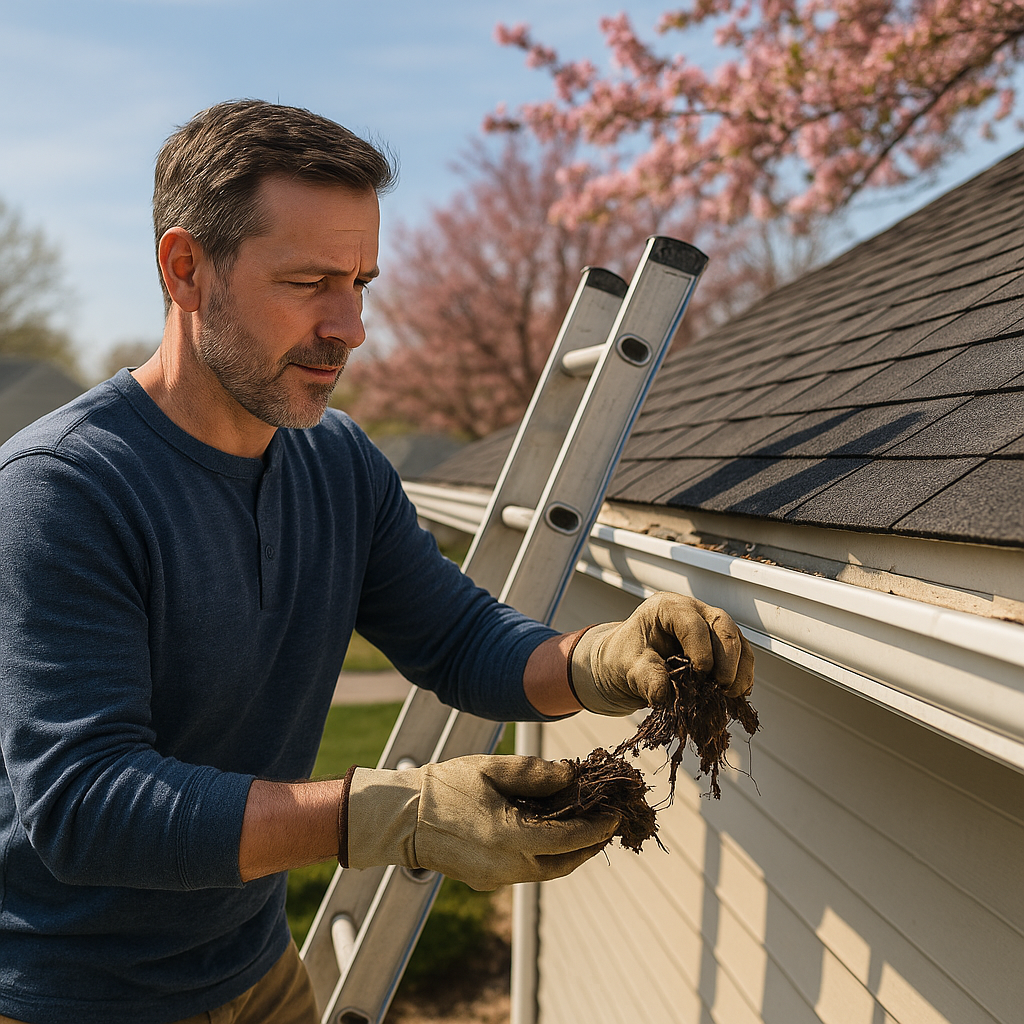
Spring Gutter Cleaning: How It Protects Your Roof's Underlayment
Clogged gutters do more than overflow — they silently destroy your roof's underlayment. Learn why spring gutter cleaning is essential for Wisconsin homeowners.
Why Spring Gutter Cleaning Is One of the Best Things You Can Do for Your Roof
May is finally here in Watertown, and with it comes the welcome sounds of spring — birds returning, lawns greening up, and the occasional thunderstorm rolling across Jefferson County. But if your gutters are still packed with last fall's leaves and winter debris, that spring rainfall isn't flowing away from your home the way it should. It's sitting, pooling, and quietly working its way into one of the most critical — and most overlooked — parts of your roofing system: the underlayment.
At Save My Roof, we inspect dozens of roofs every spring across Watertown and the surrounding southeast Wisconsin communities. Time and time again, we trace premature roof deterioration back to one simple culprit: neglected gutters.
What Is Roof Underlayment and Why Does It Matter?
Your roof is more than the shingles you can see from the street. Beneath those shingles lies the underlayment — a water-resistant or waterproof barrier installed directly over your roof deck. It acts as a critical secondary defense against moisture intrusion if shingles are ever compromised by wind, ice, or age.
Most Wisconsin homes have either felt (asphalt-saturated) underlayment or synthetic underlayment. Both are durable when properly protected — but both are vulnerable to prolonged moisture exposure. When water is allowed to sit and back up against the roof edge repeatedly, the underlayment begins to degrade. It wrinkles, cracks, and eventually fails. Once the underlayment goes, your roof deck (typically plywood or OSB) is next — and that means a much more expensive repair or full replacement.
How Clogged Gutters Damage Your Underlayment
Here's the chain reaction that homeowners rarely see coming:
- Gutters clog with leaves, seed pods, and winter grit accumulated since last fall.
- Rainwater backs up along the roofline instead of channeling away safely.
- Standing water creeps under the first course of shingles and makes repeated contact with the underlayment edge.
- In Wisconsin winters, that moisture freezes and thaws — expanding and contracting — accelerating damage through ice damming.
- Over time, the underlayment weakens, lifts, or tears, leaving your roof deck exposed.
This process is especially pronounced in Wisconsin's climate, where we see freeze-thaw cycles throughout late fall, winter, and even early spring. A single season of neglected gutters isn't always catastrophic — but two or three seasons of backup can silently shave years off your roof's effective lifespan.
3 Practical Takeaways for Watertown Homeowners This Spring
1. Clean Your Gutters Before the Late-Spring Rains Hit
May in southeast Wisconsin is prime storm season. Get your gutters cleared of all debris now, while conditions are manageable. Look for granule buildup from your shingles in the gutter beds — that's a sign your roof may also need attention.
2. Check Your Drip Edge and First Shingle Course
While you're up there (or while a professional is), inspect the drip edge flashing at the roof's edge. This metal strip directs water into the gutter and away from the fascia board. Damaged or missing drip edge is a common entry point for moisture reaching the underlayment. It's an inexpensive fix when caught early.
3. Don't Ignore Soft Spots or Staining on Your Roof Deck
If you have attic access, take a look at the underside of your roof deck after a heavy rain. Dark staining, soft wood, or visible moisture are red flags that water has already breached your underlayment. These issues won't resolve themselves — they need professional evaluation.
The Connection Between Shingle Health and Water Damage
Here's something many homeowners don't realize: aging, dried-out shingles are significantly more vulnerable to water intrusion than healthy, flexible ones. As asphalt shingles age, they lose the natural oils that keep them pliable and water-resistant. This allows water to more easily work beneath them and reach the underlayment below.
This is exactly why RoofMaxx roof rejuvenation has become such a popular solution for Wisconsin homeowners. RoofMaxx is an EPA-recognized, bio-based soy formula that restores lost oils to aging asphalt shingles — improving flexibility, water resistance, and overall roof performance. A single treatment comes with a 5-year transferable warranty and can extend your roof's life by five years or more, at a fraction of the cost of replacement. When combined with clean gutters and sound underlayment, RoofMaxx-treated shingles give your roof a genuine second life.
Let Save My Roof Help You Start the Season Right
Spring is the perfect time to reset your roof's health — and it starts with a professional eye. At Save My Roof in Watertown, WI, we offer free roof inspections and honest assessments with no pressure. Whether your roof needs a thorough cleaning, targeted repairs, a RoofMaxx rejuvenation treatment, or a full replacement evaluation, we'll give you a clear picture of where things stand.
Serving Watertown and communities throughout southeast Wisconsin, we're your local roofing experts — and we're ready to help you protect the home you've worked hard for. Contact Save My Roof today to schedule your free spring inspection.
Want a free roof assessment? Get a Free Quote